

A cancer diagnosis can feel like everything changes overnight. Conversations quickly turn to treatment plans, appointments, and survival rates. Yet for many people, another deeply personal impact unfolds more quietly—within their relationships, their sense of self, and their sexual wellbeing.
Cancer is not just a physical condition; it also affects emotional and psychological health. Advances in treatment mean more people are living longer, but survival alone is not the full picture. Quality of life—including intimacy and sexual health—is an essential part of overall care.
The physical and emotional effects of cancer can significantly influence how individuals feel about their bodies and their relationships. Changes such as fatigue, pain, hormonal shifts, surgical scars, or hair loss can affect confidence and body image. These shifts may lead to reduced desire, difficulties with arousal, or avoidance of intimacy altogether.
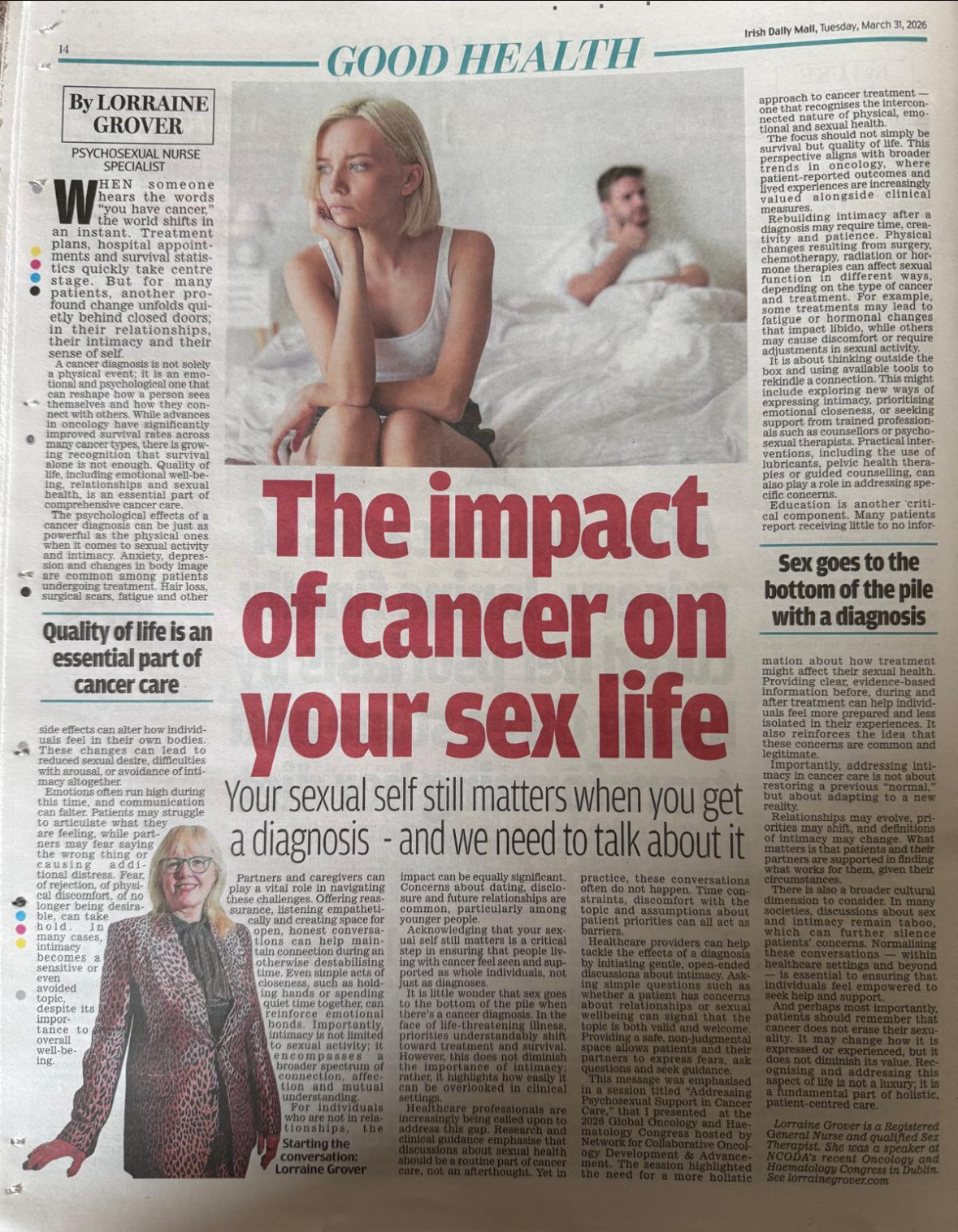
Emotional strain plays a major role too. Feelings of anxiety, sadness, or fear are common, and communication between partners can become challenging. One partner may struggle to express how they feel, while the other may worry about saying or doing the wrong thing. Over time, this can create distance, even in strong relationships.
Despite this, intimacy remains important. It is not limited to sexual activity but includes affection, connection, and emotional closeness. Simple acts like holding hands, talking openly, or spending time together can help maintain bonds during difficult periods.
Partners and caregivers are crucial in navigating these changes. Honest, compassionate communication can help both individuals feel supported and understood. However, conversations about sex and intimacy are often overlooked in medical settings, leaving many people without guidance.
Healthcare professionals have an important role in addressing these concerns. Providing clear, evidence-based information before, during, and after treatment can help individuals feel more prepared and less isolated. Support from specialists, counsellors, or therapists can also be valuable.
Ultimately, acknowledging sexual wellbeing as part of cancer care is essential. It is not about returning to a previous “normal,” but about adapting to a new reality with understanding, support, and open dialogue. Intimacy and connection remain meaningful—and they deserve attention throughout the cancer journey.